As San Jose prepares for major development around the future Little Portugal BART station, questions are growing about building heights, protecting Five Wounds Church and how the City will preserve and identify one of its oldest cultural neighborhoods.
SAN JOSE, Calif. – If you’re traveling west along Alum Rock Avenue toward Little Portugal, somewhere near King Road there was supposed to be a permanent marker letting you know you were entering the historic Portuguese neighborhood.
The City of San Jose formally called for it years ago.
It still hasn’t been built.
But there’s another side to the story.
What about people entering Little Portugal from Downtown San Jose along East Santa Clara Street?
The City’s own Little Portugal Urban Village Plan recognizes that the historic Portuguese neighborhood extends across Highway 101, with its western boundary roughly around East Santa Clara Street and 24th Street.
In fact, the City specifically chose not to place a western gateway (sign) at Highway 101 because community members believed doing so could incorrectly suggest that Little Portugal existed only east of the freeway.
Instead, the plan called for a sign element at the eastern end of Little Portugal.
That decision acknowledged something important: historic Little Portugal is larger than the neighborhood many people recognize today.
Yet years later, the eastern sign hasn’t been built, and there is no comparable marker identifying Little Portugal for people approaching from Downtown.
Now, as San Jose prepares for potentially dramatic development around the future 28th Street/Little Portugal BART Station, the question of how Little Portugal is identified and preserved has taken on new urgency.
Whatever Happened to the Little Portugal Sign?
The Little Portugal sign wasn’t simply a community suggestion.
It became part of official City policy.
San Jose’s adopted Little Portugal Urban Village Plan called for a “gateway” at the eastern end of the neighborhood near Alum Rock Avenue and King Road.
The City envisioned something more substantial than an ordinary street sign. It could include signage, public art, landscaping, sculpture, decorative columns or other architectural features.
Its purpose was straightforward: identify the area’s Portuguese heritage and let people know they were entering a distinct community.
The location was also intentional.
Little Portugal historically extended across Highway 101 and west toward 24th Street. The community didn’t want a sign at the freeway that could effectively redefine Little Portugal as only the area east of Highway 101.
So the eastern entrance near King Road was selected.
The policy was adopted.
The sign was never built.
A MyLuso review of available City planning documents and budget information has found no evidence to date of a finalized design, dedicated construction funding, construction contract or completion schedule for the Little Portugal sign.
There has been public investment along the Alum Rock corridor, including funding for banners, murals, cleaning and other revitalization efforts.
But the permanent identification of Little Portugal envisioned in the City’s own plan remains unfinished.
Should Little Portugal Be Identified From Both Directions?
The history behind the City’s decision raises a new question.
If Little Portugal historically extends west of Highway 101 toward East Santa Clara Street and 24th Street, should the neighborhood also be identified for people approaching from Downtown San Jose?
Someone traveling east from Downtown can pass through the historic western portion of Little Portugal, approach Five Wounds Portuguese National Church, cross Highway 101 and continue toward Alum Rock Avenue without encountering the kind of prominent identification envisioned in the original plan.
The existing plan did not promise a western sign near 24th Street.
That distinction is important.
But as San Jose prepares to rewrite the planning framework for this entire area, this may be an opportunity to consider whether both entrances to historic Little Portugal should finally be identified.
An eastern marker near King Road could fulfill the City’s existing commitment.
A western marker near the historic boundary could tell people arriving from Downtown that they are entering Little Portugal rather than waiting until they have already traveled through a significant portion of it.
With thousands of new residents expected in the area, identifying the historic neighborhood may become more important – not less.
From 300 Feet to 270 Feet
The missing sign is only one part of a much larger discussion about Little Portugal’s future.
The updated Five Wounds Urban Village Plan anticipates thousands of new homes and jobs around the future BART station.
At one point, buildings reaching approximately 300 feet were being considered.
The proposal generated substantial community pushback, including concerns about traffic, infrastructure, neighborhood character and the effect of high-rise development on Five Wounds Portuguese National Church.
Following that opposition, the proposed maximum was reduced to 270 feet.
The reduction is significant. It demonstrates that public participation has already influenced the planning process.
Residents spoke.The proposal changed.
But for many residents, the fundamental concern remains: If 300 feet was considered too much, is 270 feet sufficiently different?
The issue isn’t simply the removal of 30 feet. It’s whether buildings approaching that scale should rise so close to one of East San Jose’s most recognizable historic and cultural landmarks.
Will Five Wounds Be Dwarfed?
For generations of Portuguese families, Five Wounds hasn’t simply been another church.
Portuguese immigrants and their descendants worshipped there, married there, baptized their children there and gathered there.
Its twin towers became a visual symbol of Portuguese San Jose.
Even after many Portuguese families moved elsewhere, you could see Five Wounds and know where Little Portugal was.
That visual relationship is at the center of today’s debate.
If buildings reaching 270 feet rise behind and around Five Wounds, will the church remain the defining landmark of Little Portugal?
Or will its century-old towers appear small against a backdrop of high-rise development?
For many opponents, the concern is that Five Wounds will be dwarfed.
What makes the issue particularly significant is that the community had previously considered how development should occur around the church when BART arrived.
The Five Wounds/Brookwood Terrace BART Station Area Community Concept Plan envisioned buildings immediately north of Five Wounds at approximately three to five stories, with heights gradually increasing farther away.
That vision wasn’t anti-development. It sought to bring housing and density near transit while allowing Five Wounds to remain visually prominent.
Today’s proposal represents a very different scale. The question, therefore, isn’t simply 300 feet versus 270 feet.
It’s whether San Jose should return to the earlier principle of lower development immediately around Five Wounds with taller buildings farther away.
Growth and Preservation Can Coexist
This debate shouldn’t be reduced to development versus no development.
San Jose needs housing. BART represents an enormous regional investment. Building housing near major transit makes sense.
Little Portugal cannot – and should not – be frozen in time.
The question is how growth occurs.
Could lower buildings immediately around Five Wounds transition into taller buildings farther away?
Could important sightlines to the church be protected?
Could San Jose achieve substantial housing density without placing its tallest buildings directly behind one of the neighborhood’s most recognizable landmarks?
Those aren’t anti-housing questions. They’re planning questions.
And they’re especially important because Five Wounds isn’t only culturally significant to the Portuguese community.
It is officially recognized as a City of San Jose Landmark.
What Happens When the Little Portugal Plan Goes Away?
There is another reason these questions matter now.
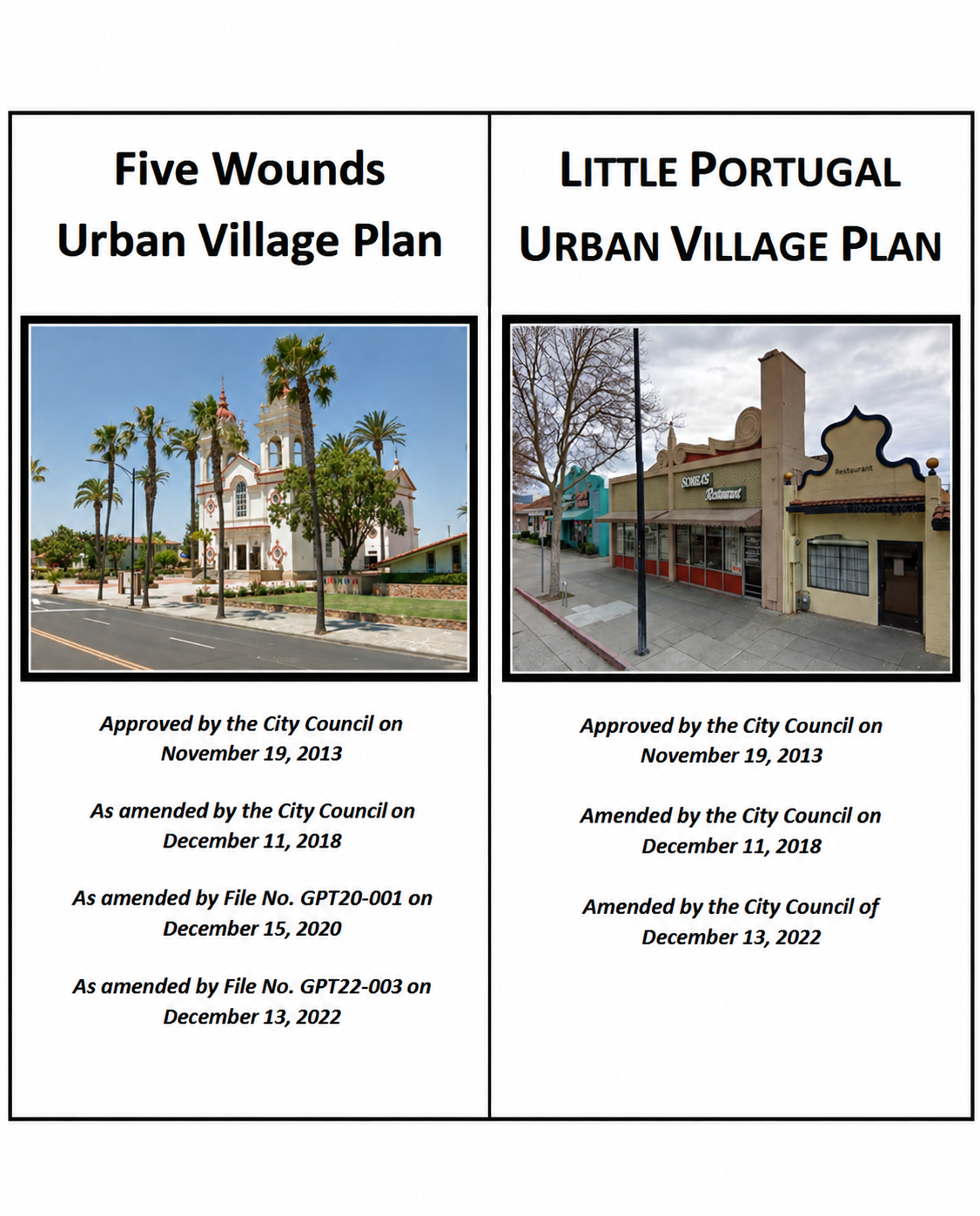
San Jose is consolidating the Five Wounds, Little Portugal, Roosevelt Park and 24th & William Urban Village plans into one larger Five Wounds Urban Village Plan.
Once the new plan is adopted, the standalone Little Portugal Urban Village Plan is expected to be retired.
That raises important questions about commitments contained in the existing plan.
Will the Little Portugal sign at Alum Rock Avenue and King Road be explicitly carried into the new plan?
Should the new plan consider identifying the historic western entrance near East Santa Clara Street and 24th Street as well?
Will important views of Five Wounds be protected?
How will Five Wounds’ City Landmark status factor into development decisions?
And will Little Portugal remain identifiable within the much larger Five Wounds planning area – not simply through the name of a BART station, but through physical improvements that preserve its identity?
Before the existing Little Portugal plan disappears, several questions deserve clear answers:
-
- What is the status of the Little Portugal sign promised near King Road?
-
- Why has it never been built?
-
- Will that commitment be included in the new Five Wounds plan?
-
- Should Little Portugal also be identified from its historic western boundary near East Santa Clara Street and 24th Street?
-
- What analysis supports 270 feet as the appropriate maximum around the future BART station?
-
- Could lower buildings near Five Wounds transition into taller development farther away?
-
- Will important sightlines to Five Wounds be protected?
-
- How is the church’s City Landmark status being considered?
These aren’t questions about stopping San Jose from growing.
They’re questions about whether growth and cultural preservation are receiving equal consideration.
What Will Little Portugal Look Like in 2040?
Public participation has already made a difference.
The City considered 300 feet. Residents pushed back. The proposal became 270 feet.
The planning process isn’t over.
That gives residents, Portuguese organizations, Five Wounds parishioners, homeowners and businesses an opportunity not simply to say what they oppose, but to define what they believe should be preserved.
That could include lower heights immediately around Five Wounds, taller buildings farther away, protected views of the church, architectural elements recognizing Portuguese history and permanent signs identifying Little Portugal from both directions.
BART will arrive. Housing will be built. The neighborhood will change. None of that necessarily requires erasing what came before.
Little Portugal’s name will soon appear on transit maps throughout the Bay Area as part of the 28th Street/Little Portugal BART Station.
That recognition matters. But preserving a community requires more than putting its name on a transit map.
It also means making sure future generations understand where that community is, where it came from and which landmarks helped define it.
The City envisioned a permanent marker at the eastern entrance to Little Portugal years ago. It still isn’t there.
Perhaps the discussion today should be even broader.
As San Jose plans Little Portugal’s future, maybe it’s time to finally mark both ends of its historic community – while making sure the landmark at its heart isn’t lost in the skyline.
MyLuso will continue following the Five Wounds Urban Village Plan Update, proposed building heights surrounding Five Wounds Portuguese National Church and the status of the long-promised Little Portugal sign.